
A towering return
Welcoming giraffe back to the Kalahari at Feline Fields Lodge
There are moments in conservation that feel quietly important, and then there are moments that stop you in your tracks. The arrival of four giraffe at Feline Fields Lodge is one of those moments. Two males and two females stepping cautiously into the Kalahari, tall silhouettes against an endless horizon, was more than a release. It was the culmination of years of belief, persistence, and a deep commitment to bringing life back to this part of Botswana.
The pride felt in witnessing these giraffe arrive is immense. Feline Fields deliberately chose this remote area of western Botswana with a long-term vision in mind. Not only to create meaningful opportunities for the local community, but also to restore wildlife to a landscape where it once thrived. This is a place where giraffe, lions, leopards and countless other species once roamed freely. Over time, that abundance faded, leaving behind a silence that felt both unsettling and unnatural.
When the first tent was pitched at what is now Feline Fields Lodge in 2012, the quiet was striking. There were few birds, little visible wildlife, and almost no signs of the vibrant ecosystem described in historical accounts of the Kalahari. Yet those stories spoke of lions moving through the grasslands, leopards in the trees, and game spread across the plains. The potential was there, waiting to be unlocked.
One of the greatest challenges was water. Years of effort followed, with seven boreholes drilled at significant cost, only to find salty water each time. Refusing to give up, the team drilled again, this time 15 kilometres away. Finally, sweet water was found. A 15km pipeline now supplies water to Feline Fields Lodge, its guests, and crucially, the surrounding wildlife. That single breakthrough marked a turning point.
With water came life. Waterholes began to fill, supported in the dry season and replenished naturally by summer rains. Slowly, almost quietly, the landscape started to respond. Kudu appeared. Then painted wolves (African wild dogs). Leopards began visiting water points in the early morning hours. The ecosystem was waking up again. But one of the most iconic species was still missing. Giraffe.
Reintroducing giraffe to this part of the Kalahari was never going to be simple. Permits, planning, and suitability assessments took years. Infrastructure had to be carefully designed, including a new boma, cutlines and temporary game fencing. It was a significant investment, made without certainty, but driven by conviction. Feline Fields believed this land could once again support giraffe, and that belief never wavered.
Three months ago, the final approval came through. The wildlife department identified four young orphaned giraffe who could be relocated to Feline Fields Lodge. They travelled a long distance to reach their new home and, as with any reintroduction, time and patience are essential. For now, they are being carefully monitored in a boma as they acclimatise to their surroundings. Their wellbeing comes first. Once the team is confident that they are settled and ready, they will be released fully into the Kalahari wilderness.
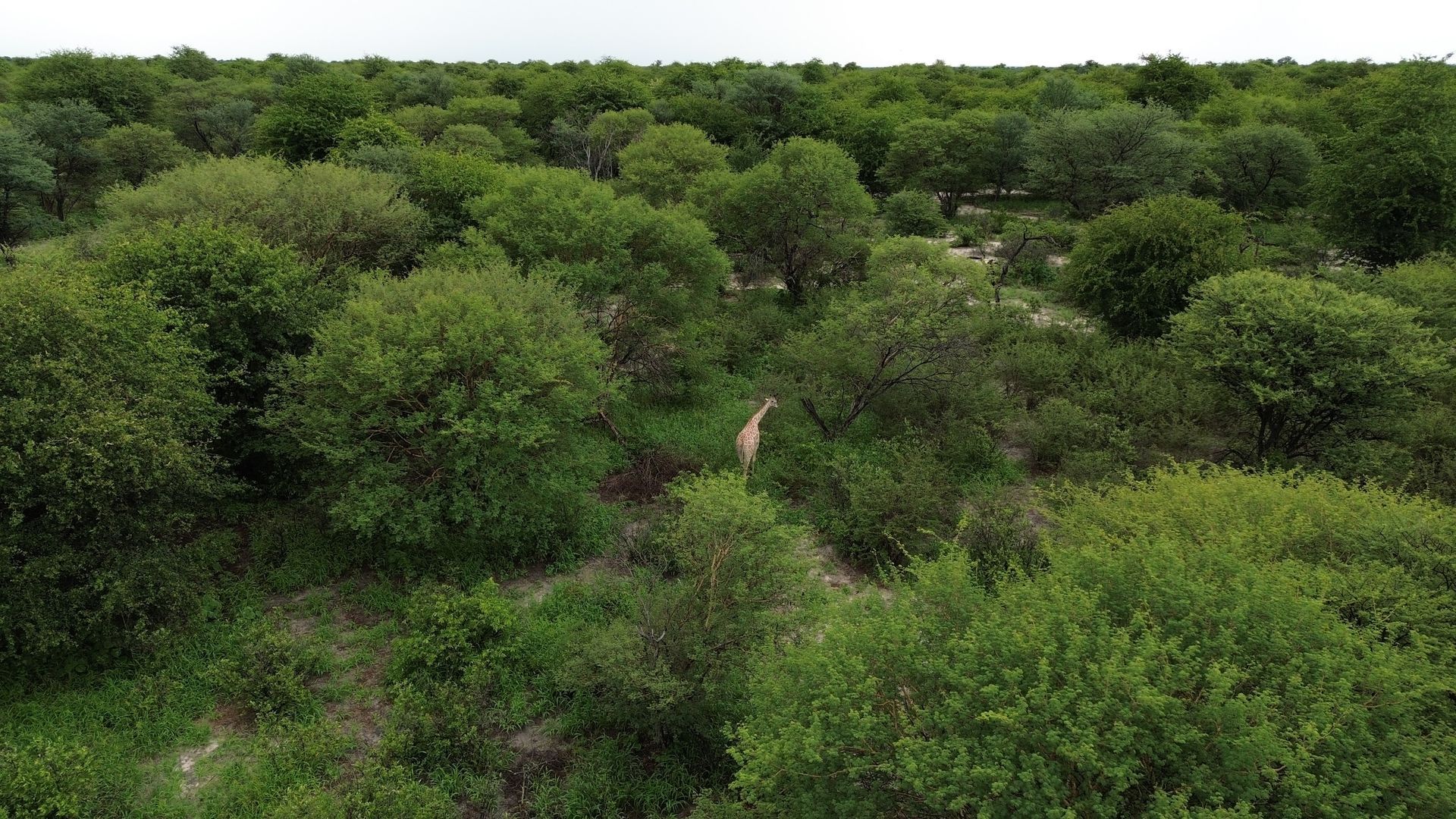
Giraffe play a vital ecological role. As selective browsers they shape tree growth, open up feeding opportunities for other species, and contribute to seed dispersal across wide areas. Their return brings balance, movement and energy back into the landscape. With both males and females present, the foundations are now in place for future generations.
For guests staying at Feline Fields Lodge, the opportunity to eventually witness giraffe moving through this open Kalahari terrain will be deeply special. These are not fleeting sightings. They are moments rooted in purpose. Knowing that your safari experience supports real conservation makes those encounters all the more meaningful.
Feline Fields has always believed that conservation and tourism should work hand in hand. Revenue generated through carefully considered safari experiences directly supports projects like this giraffe reintroduction. In return, guests gain something far richer than luxury alone. They become part of a story of restoration and resilience.
There is also a powerful impact beyond the wildlife itself. For staff and local communities, the return of giraffe is a source of pride. These animals are part of the natural heritage of the region. Seeing them once again against the Kalahari horizon reinforces the idea that positive change is possible, even in the most challenging environments.
Monitoring and protection will continue long after the release. Conservation does not end when the gates open. It evolves, adapts, and requires constant care. Feline Fields remains deeply committed to ensuring these four giraffe thrive, that their habitat remains protected, and that this reintroduction becomes a lasting success.
The Kalahari of western Botswana is coming back to life. Slowly, steadily, and with intention. To have played a role in that recovery is a privilege, and yes, a pioneering achievement. The return of giraffe to Feline Fields Lodge is a celebration, but it is also a promise. A promise to the land, to the wildlife that belongs here, and to future generations who deserve to experience this wilderness as it once was.
This is conservation in action. And at Feline Fields, it is only the beginning.