
The elusive hunter
Meet the magical leopards of Feline Fields...
Leopards are the quiet ghosts of the African wilderness, their presence felt more often than it is seen. They move through the landscape with a fluid grace, a combination of strength and subtlety that allows them to slip through the bush almost unnoticed. At both Feline Fields Vintage Camp and Feline Fields Lodge, the leopard is never far away, though it rarely announces itself.
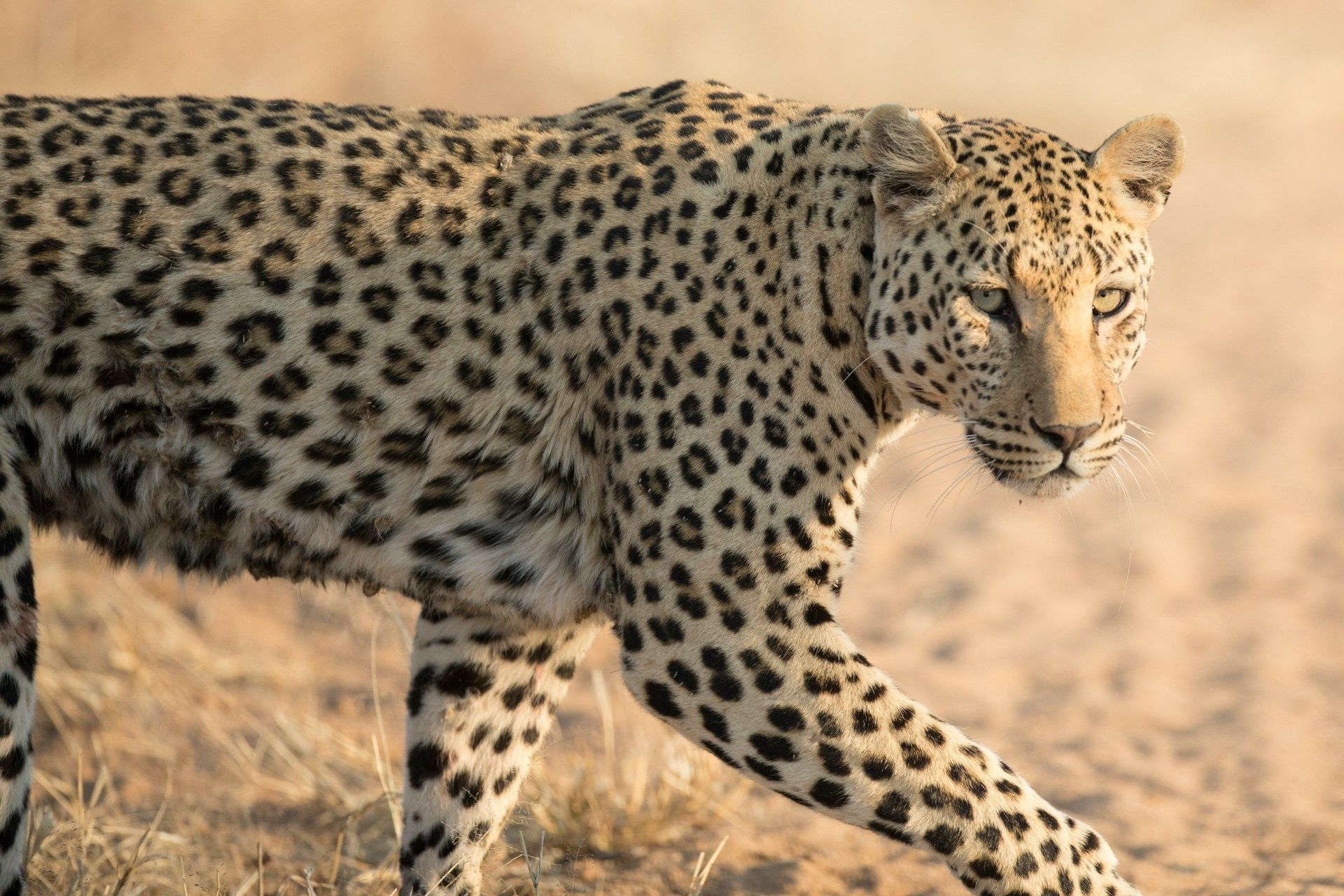
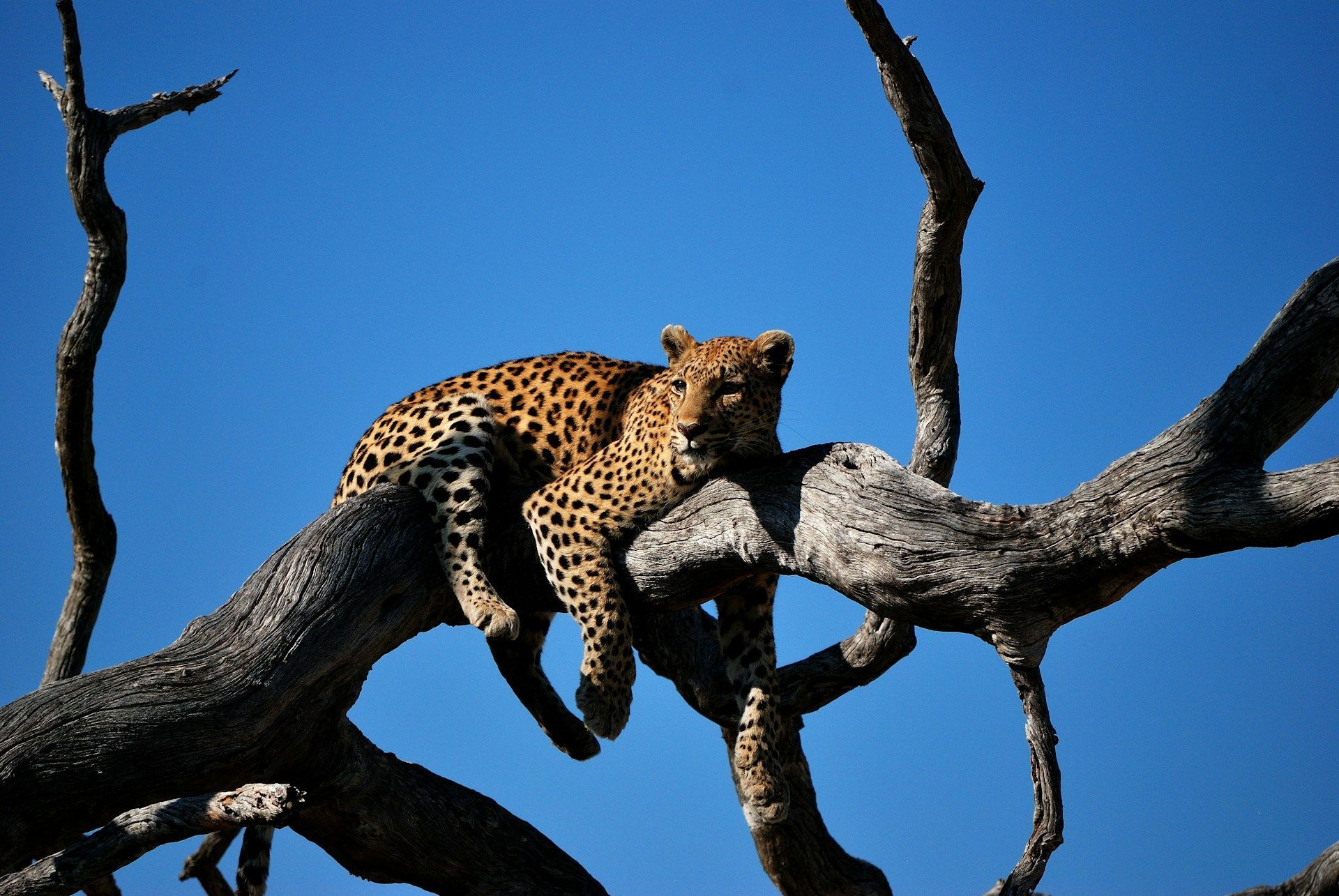
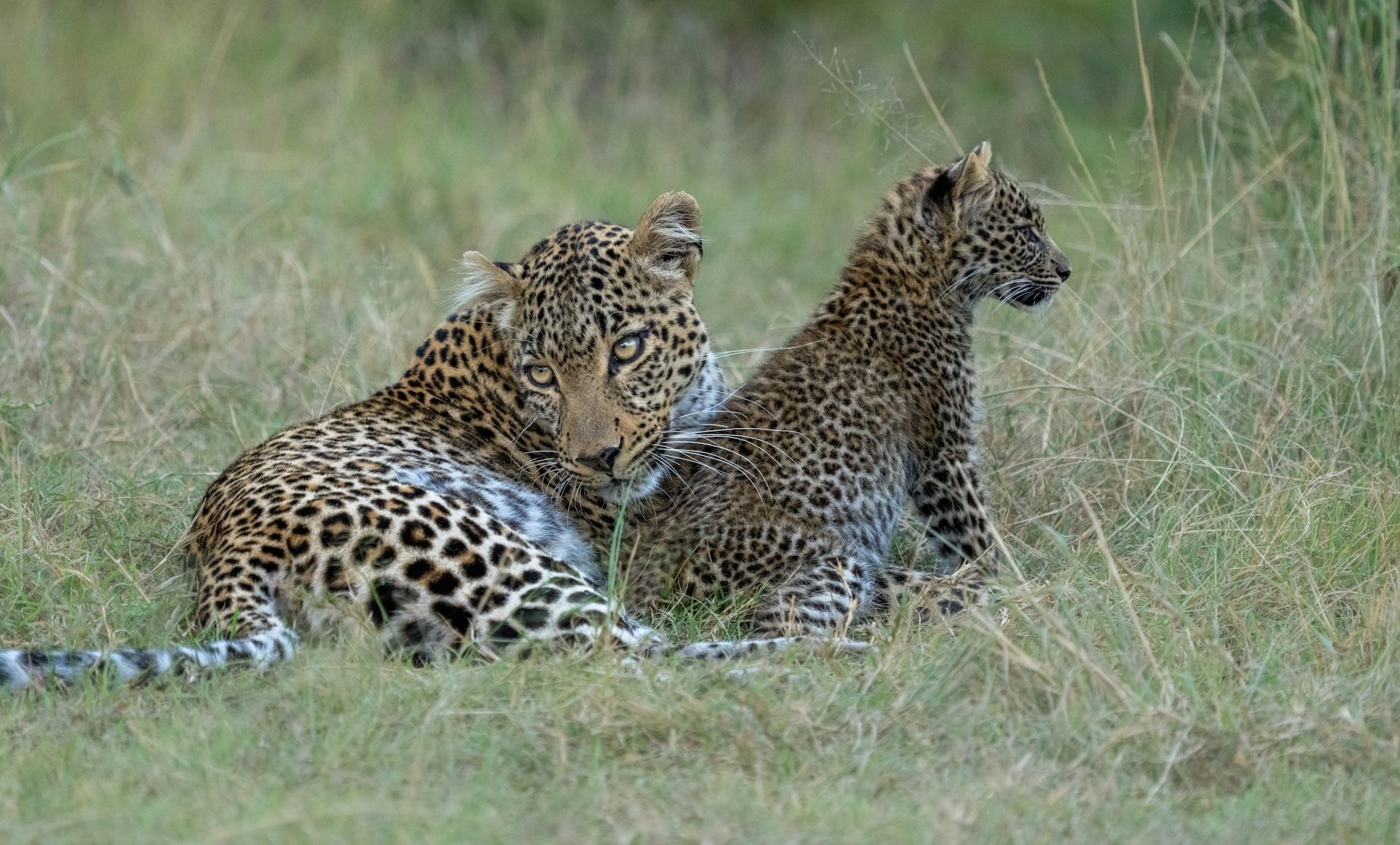
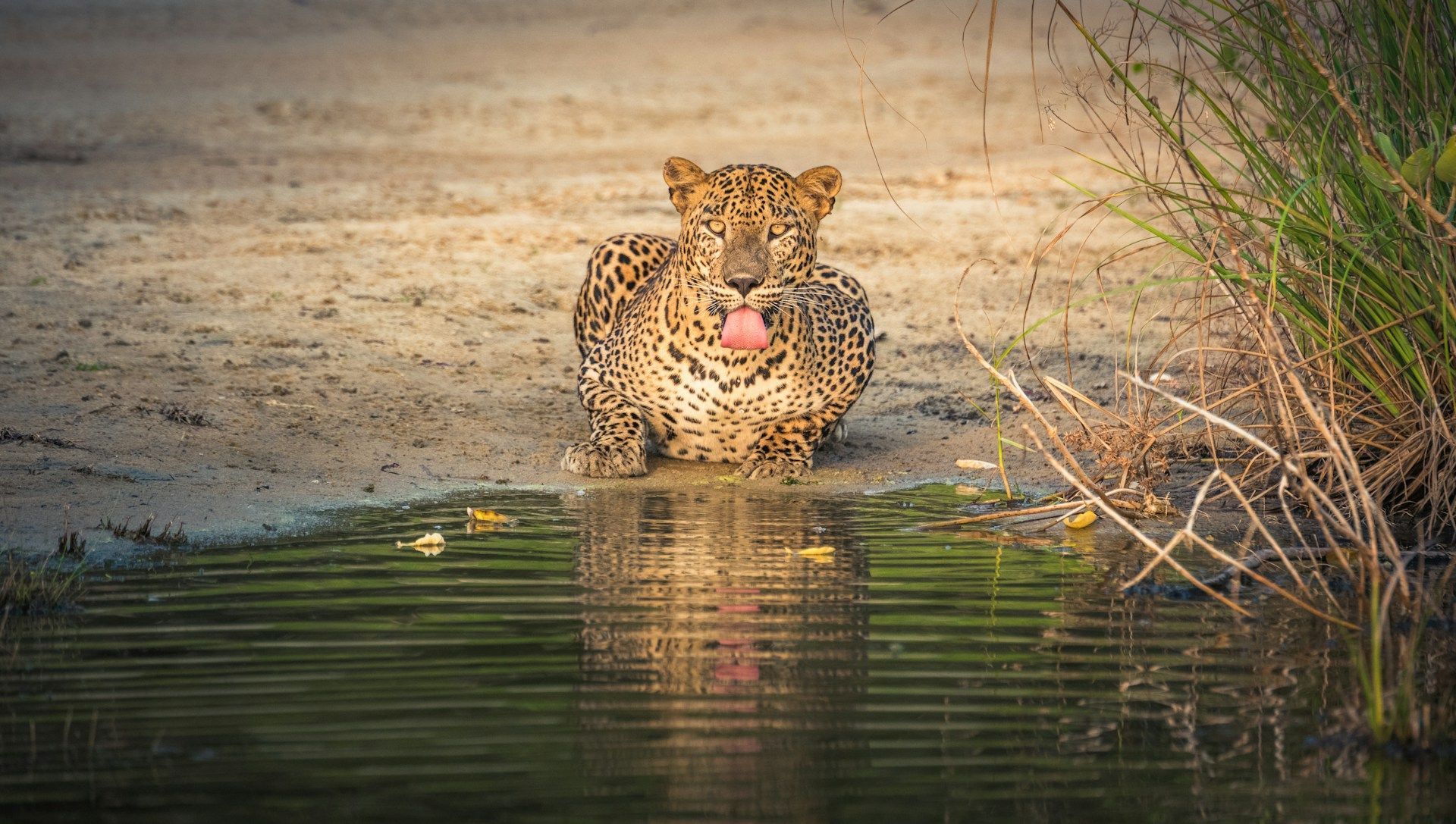
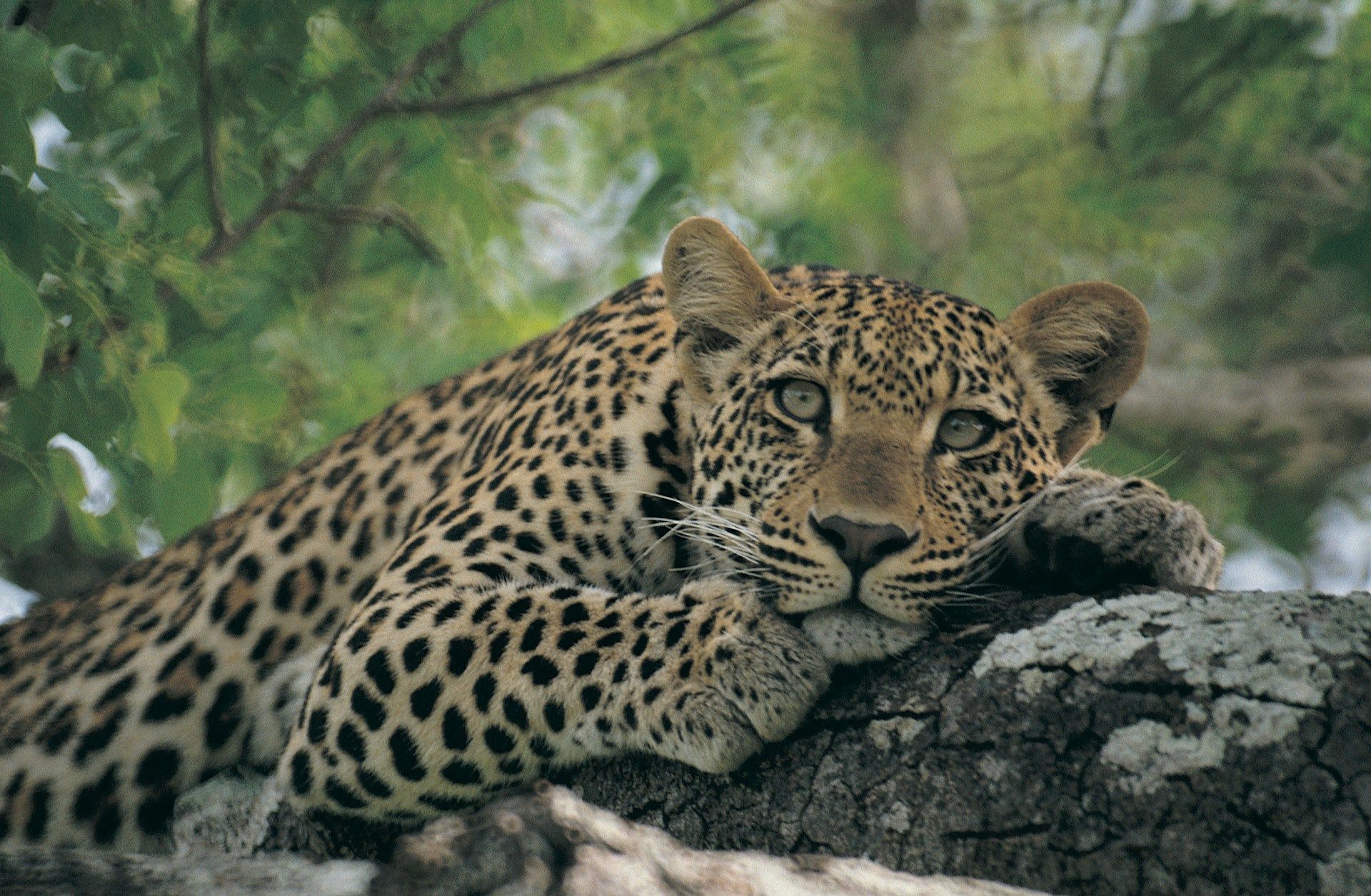
It is their elusiveness that makes leopards so captivating. Unlike larger or more gregarious species, they do not gather in herds or make themselves obvious. Instead, they weave silently through trees, tall grass, and scrub, watching, listening, and waiting. Their eyes, adapted to low light, are the key to a life lived in shadows, and even when a guide or tracker points the way, spotting one can require patience, attention, and a little luck.
Leopards are adaptable, inhabiting the riverine forests along the Mbudi Channel as easily as the open, semi-arid scrub of the Kalahari. At Feline Fields Vintage Camp, they may climb into the branches of the trees that line the permanent channel, using the vantage point to rest, survey the surroundings, or stash a recent kill.
In the Kalahari, they navigate low trees, dense thorn thickets, and open grasslands, blending perfectly with the muted tones of the scrub and plains. Across both regions, their presence shapes the behaviour of other wildlife: impala pause, duiker listen, and even birds take notice when a leopard moves nearby.
Part of their appeal lies in the mystery that surrounds them. Leopards are seldom predictable. They hunt alone, sometimes by night, sometimes by day, and their patterns shift with seasons, prey availability, and the subtle pressures of the ecosystem. Seeing one is never guaranteed, yet the possibility is woven into every drive or walk through the bush. That uncertainty transforms a safari into an exercise in observation, patience, and appreciation of the environment as a whole.
Watching a leopard move is a lesson in restraint and precision. The muscles beneath their spotted coats ripple without a sound, their tails balancing each step, their heads low and ears alert. Even when resting, they seem aware of everything around them - a flash of movement in the grass, the distant call of a hornbill, the scent of a passing antelope. Every moment with a leopard is a glimpse into a life lived entirely in tune with the natural world.
Yet the magic of leopards extends beyond the animal itself. Their presence shapes the landscapes of the Delta and the Kalahari, giving structure and tension to the ordinary moments. Watching impala graze, zebra drift across the plains, or a lilac-breasted roller flash through the canopy becomes richer when you know a leopard could be nearby. The bush takes on layers: sounds, shadows, and signs that speak of something hidden but alive.
At Feline Fields, the leopard reminds us that the essence of a safari is not in ticking off species from a list. It is in the stillness, the listening, and the slow accumulation of awareness that comes from being present. The thrill is in reading the landscape, noticing spoor, observing behaviour, and imagining the unseen predator moving just out of sight. Leopards teach patience and attentiveness, two qualities that reveal the subtler, quieter rhythms of the bush.
In the end, a leopard is never simply a sighting. It is an atmosphere, a tension, a whispered presence that enhances every ordinary encounter - the grazing impala, the running wildebeest, the fluttering birds. Whether on the Mbudi Channel in the Delta or in the scrub and grass of the Kalahari, the leopard is a constant reminder of the intelligence, adaptability, and beauty that permeates Africa’s wilderness.
It is the rare, elusive, and often hidden elements of the bush that give it its magic - and the leopard embodies that magic more completely than almost any other animal.