
Channelling the spirit of the Okavango
Why the Mbudi Channel sits at the heart of Khwai
Feline Fields Vintage Camp sits at the centre of one of Africa's great wilderness corridors and to understand it you need to understand the water that defines it and makes year-round safaris so exceptional in this incredible corner of the Okavango Delta called the Khwai Community Concession...
The water that feeds the Okavango begins its journey 1,600km away, rising in the Bié Plateau highlands of central Angola as the Kubango River, gathering momentum as it flows south and east through Namibia, crossing into Botswana at the small village of Mohembo and fanning out across the ancient Kalahari sands into the largest inland delta on earth.
By the time it reaches the north-eastern fringes of that delta, where the Khwai River threads between two of Africa's most celebrated protected areas, it has become something extraordinary: a permanent, life-giving water system in the middle of a largely arid continent, and one of the most wildlife-rich corridors anywhere in the world.
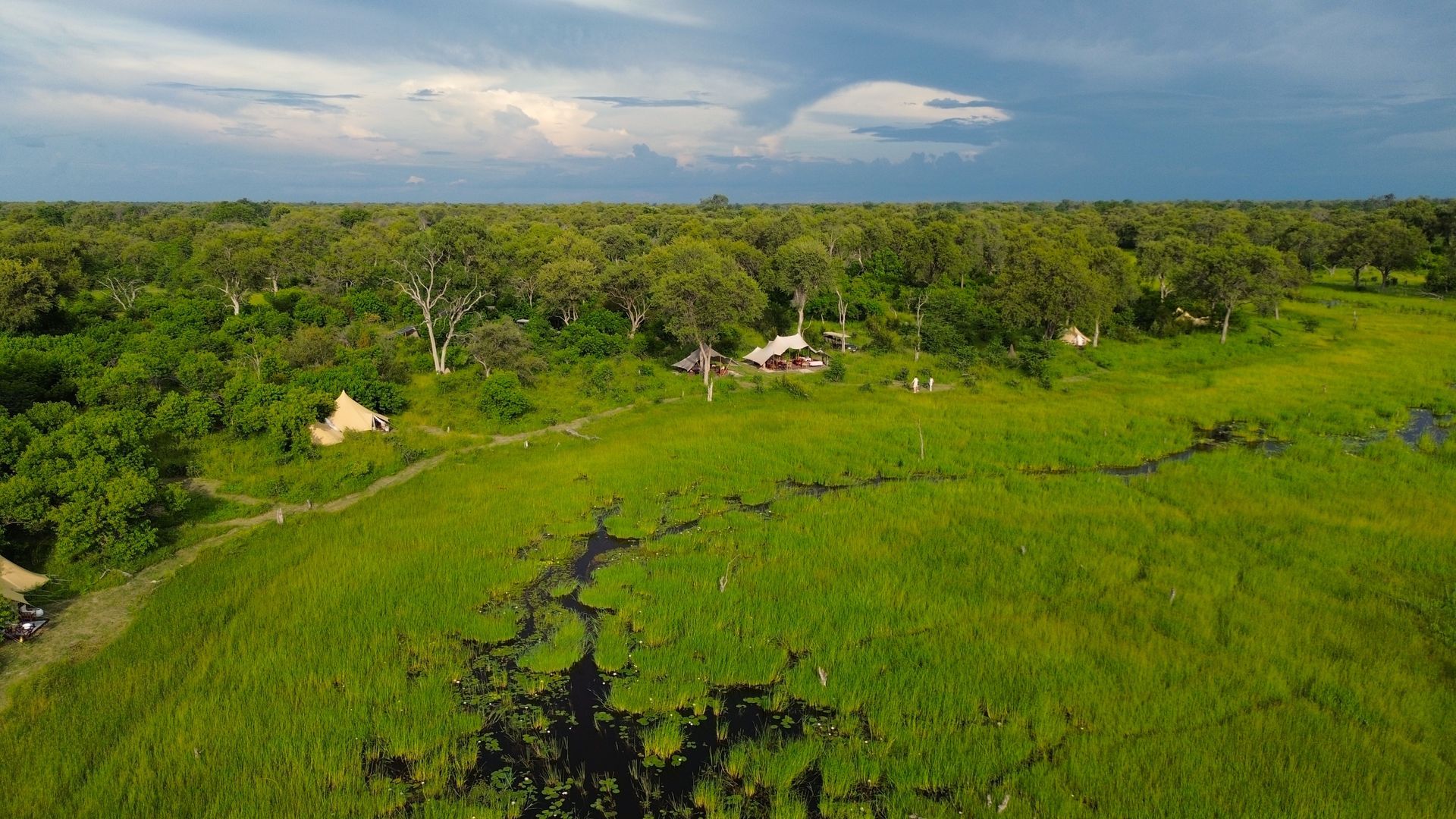
At the heart of that corridor, running permanent and clear through the Khwai Community Concession, is the Mbudi Channel. And on its banks sits Feline Fields Vintage Camp.
Where the water comes from
Understanding the Mbudi Channel means understanding the system it belongs to, and that system is one of the great hydrological phenomena of the natural world. The Okavango Delta spreads across an area of between 6,000 and 15,000 square kilometres depending on the season, its fluctuating boundaries determined by the annual flood pulse that arrives each year, typically peaking in the Khwai region between June and August.
The Khwai River is one of the delta's north-eastern distributaries, extending from the Okavango system to form the northern boundary of Moremi Game Reserve. It's a river that defines a frontier as much as a waterway, marking the edge of one of Africa's most strictly protected wildlife areas and opening out into the community-managed concessions that border it to the north.
The Mbudi Channel is part of this system, carrying permanent water through the Khwai Community Concession year-round, independent of the seasonal flood pulse that governs so much of the wider delta. This permanence is the detail that changes everything. While much of the Okavango's outer reaches fill and recede with the seasons, the Mbudi Channel runs regardless, making it a year-round ecological anchor in a landscape that would otherwise fluctuate dramatically.
The name matters
The Mbudi Channel has its own character, its own ecology and its own particular identity within the broader Khwai River system, and the camp's position on it gives it a quality of intimacy and directness with the water that a camp on the main river channel doesn't always offer. It's quieter, more enclosed, more connected to the minutiae of Delta life: the sound of the channel at night, the way the light moves across the water at first light, the sense that the wilderness here is immediately present rather than something you drive to find.
The corridor between giants
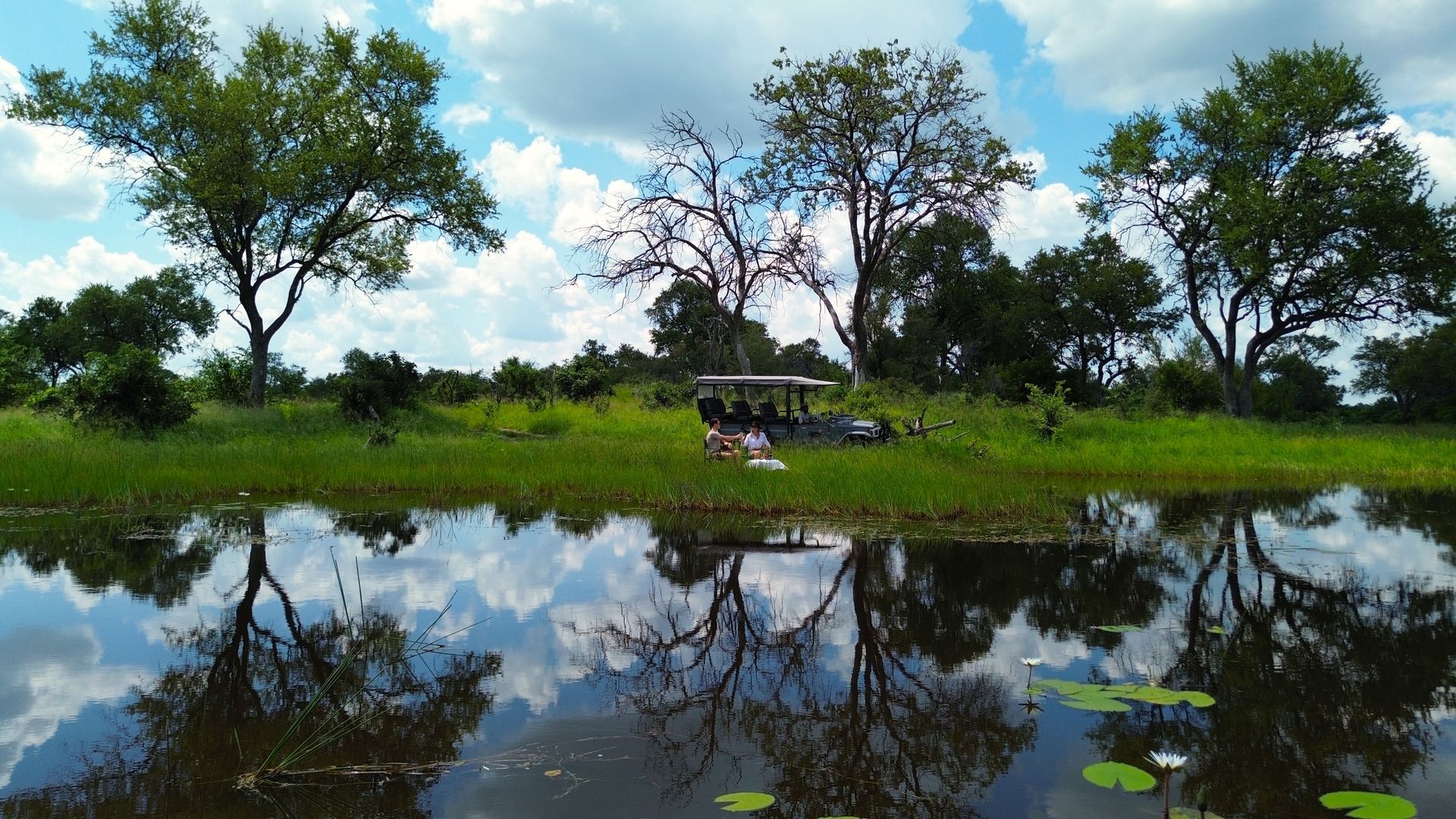
The Khwai Community Concession sits within one of the most remarkable wildlife corridors in Africa, sandwiched between Moremi Game Reserve to the west and south and Chobe National Park to the east. No fences interrupt the movement of animals across this frontier. The concession covers approximately 30,000ha of riverine forest, seasonal floodplains, open mopane woodland and permanent waterways, and the wildlife that moves through it does so freely, following ancient migration routes between two of the continent's greatest protected areas.
The result is a density and diversity of wildlife that consistently astonishes even the most experienced safari travellers and makes the Khwai region one of the most productive wildlife destinations in Africa.
What the Mbudi Channel makes possible
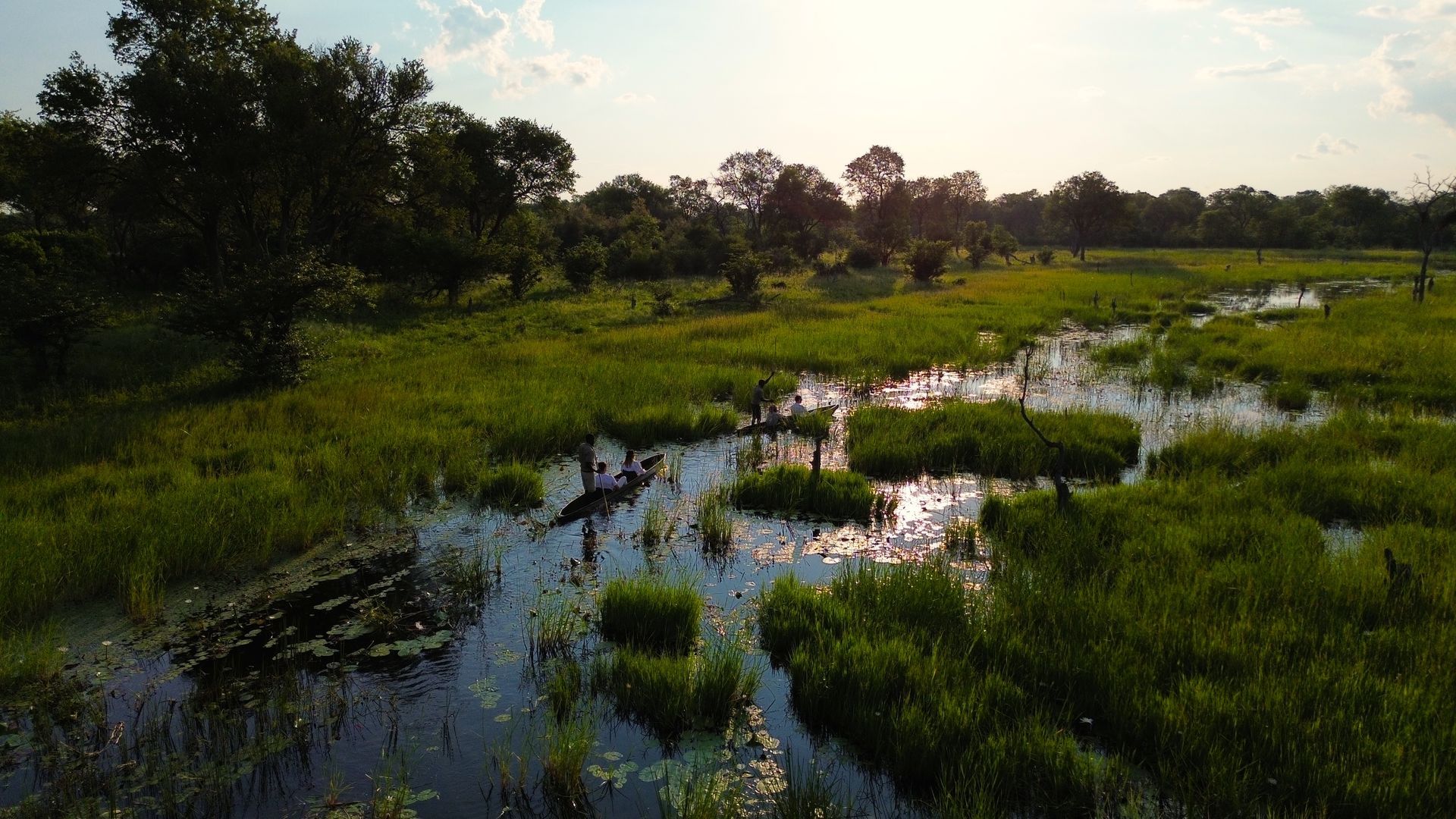
The channel's permanent water does something for Feline Fields Vintage Camp that no amount of design or hospitality can manufacture: it makes the mokoro a year-round offering. In much of the Okavango, mokoro trips are seasonal, dependent on water levels that fluctuate with the flood pulse and recede to nothing in the dry months.
On the Mbudi Channel, the water doesn't go anywhere. The papyrus-fringed banks, the lily-covered backwaters, the reed beds that hold extraordinary concentrations of waterbirds year-round — all of it remains accessible regardless of the season, offering a perspective on the Delta that no game vehicle can replicate.
A mokoro at water level on the Mbudi Channel is a fundamentally different experience from a vehicle-based safari. The silence is the first thing, a complete absence of engine noise that allows the sounds of the channel to fill the space: the plunge of a malachite kingfisher, the alarm call of a reed cormorant, the deep exhalation of a hippo somewhere in the reeds ahead. The vantage point is the second thing, low and intimate, at the level of the water rather than above it, which changes the geometry of every sighting and makes even familiar species feel newly observed. The pace is the third thing, unhurried and human-powered, governed by the rhythm of the pole rather than any schedule.
Exeptional birding
Over 400 bird species have been recorded in the Khwai region, a figure that reflects the extraordinary diversity of habitats compressed into a relatively small area: riverine forest, open floodplain, permanent channel, seasonal wetland, mopane woodland. The Mbudi Channel sits at the intersection of several of these habitats, and the birdlife it supports in peak season is genuinely difficult to describe to someone who hasn't witnessed it. Saddle-billed storks working the shallows. African fish eagles calling from every tall tree along the bank. Pygmy geese tucked into the lily pads. Pel's fishing owl, one of Africa's most sought-after birds, hunting the channel at dusk with a silence that belies its size.
The lagoon
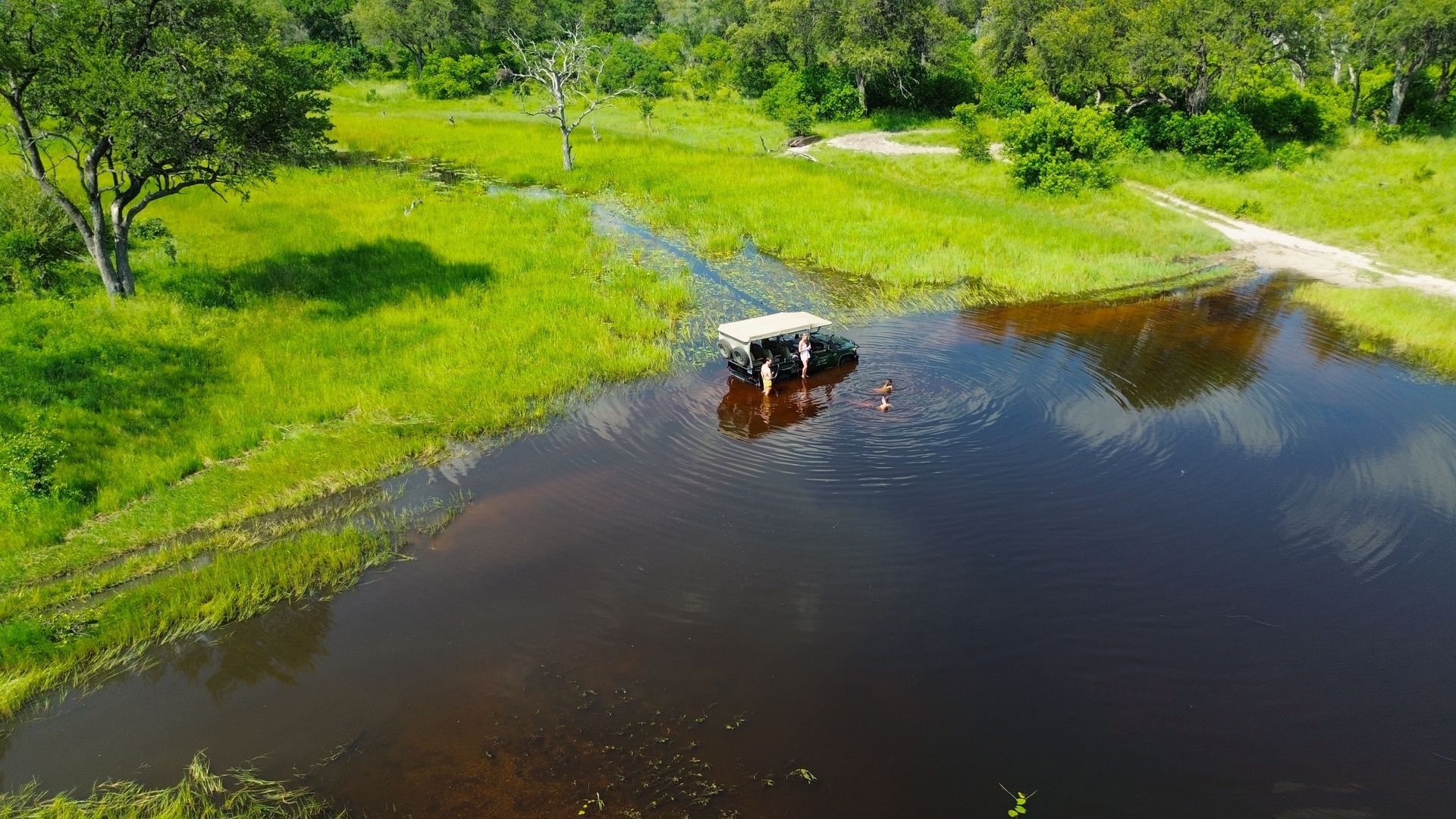
At Feline Fields Vintage Camp, the Mbudi Channel offers one more thing that sets it apart from almost any other safari destination: the chance to swim. A managed lagoon adjacent to the camp, fed by the channel's clear, tannin-stained water, is free of crocodiles and hippos, its tea-coloured shallows crystalline and surprisingly inviting.
The water's colour comes from the tannins leached from surrounding vegetation, and it carries the particular quality of light that makes it look darker than it is, the bottom visible, the temperature perfect on a warm afternoon. To wade into a waterway of the Okavango Delta, in the middle of a game drive itinerary, under an open African sky, is an experience that guests consistently describe as the moment the trip became something they'll never quite forget.